Multiple States Enact Restrictions on Dual-Currency Sweepstakes Casinos During May 2026
Written by Ellis Griffin · May 31, 2026

Multiple States Enact Restrictions on Dual-Currency Sweepstakes Casinos During May 2026
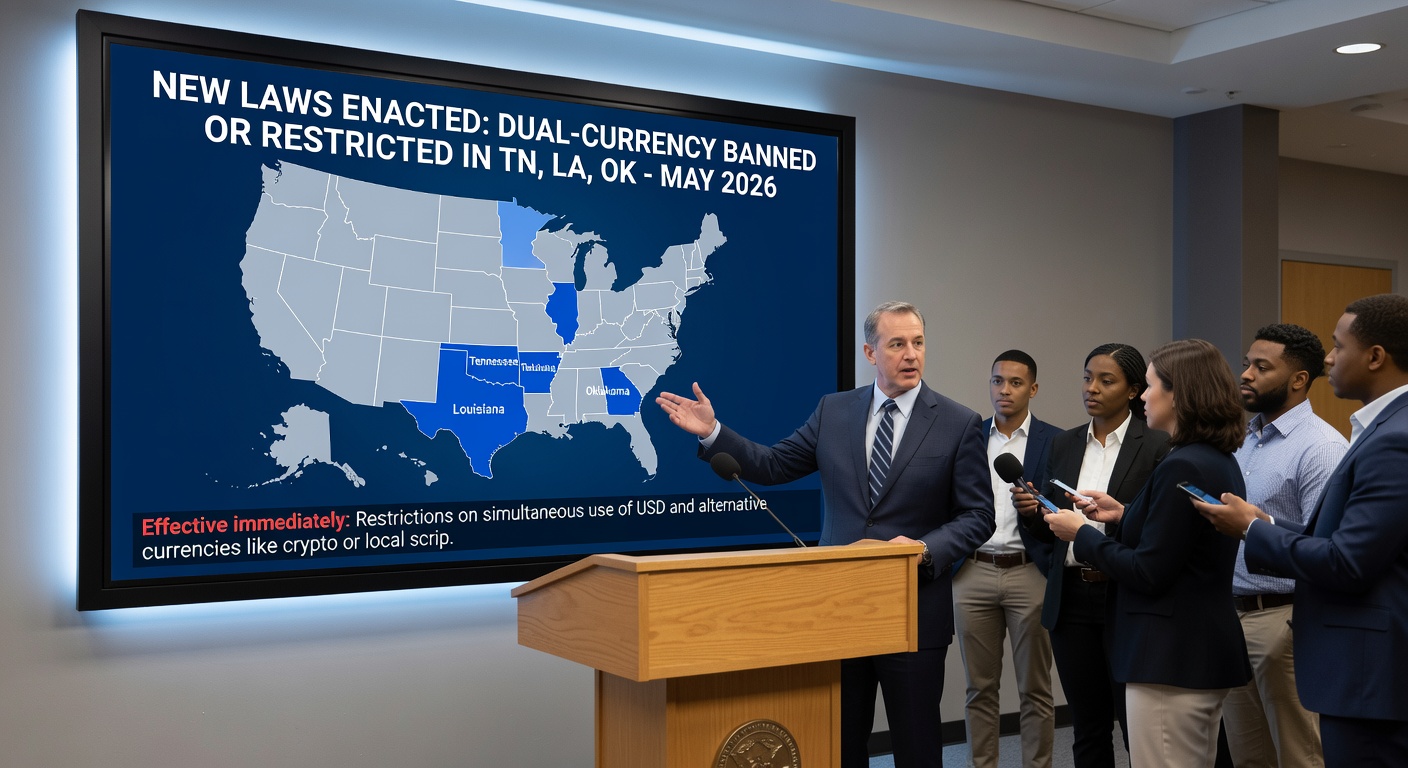
State governments in Tennessee, Louisiana, and Oklahoma moved forward with new statutes in May 2026 that directly address dual-currency sweepstakes casinos, while Iowa approved separate enforcement legislation aimed at unlicensed operators. Tennessee’s measure took effect immediately upon signing, Louisiana’s provisions activate August 1, and Oklahoma’s changes begin November 1. These coordinated actions follow earlier regulatory warnings and represent a clear shift in how several jurisdictions handle this category of gaming platforms.
Details of State-Level Legislation
Tennessee lawmakers passed a full ban that prohibits dual-currency sweepstakes operations from the moment the governor signed the bill, leaving no transition window for existing platforms. Louisiana chose a phased approach with its restrictions scheduled to begin August 1, giving operators a defined period to adjust compliance or cease activities. Oklahoma set November 1 as the start date for its new limits, allowing businesses additional months to restructure offerings or exit the market. Iowa’s enforcement bill expands the authority of state regulators to pursue unlicensed sweepstakes operators more aggressively, including broader investigative powers and penalty provisions.
Each statute targets the dual-currency model specifically, which combines elements of traditional sweepstakes promotions with real-money elements. The measures do not apply uniformly to all forms of sweepstakes gaming, but focus on platforms that permit both free and paid participation tracks leading to prize redemption.
Operator Responses and Market Adjustments
Multiple operators reacted to the legislative pressure and related cease-and-desist orders by modifying user access or withdrawing entirely from affected states. In Illinois, several platforms restricted services or removed state residents from active player lists before new enforcement actions could take effect. Tennessee saw similar exits, with companies citing the immediate ban as the primary driver for rapid compliance changes. These adjustments occurred alongside ongoing communications between regulators and industry participants, resulting in documented shifts in availability across both states.
Observers tracking the sector noted that companies often chose one of two paths: full withdrawal from restricted jurisdictions or reconfiguration of their dual-currency systems to fall outside the new statutory definitions. Both approaches required updates to payment processing, marketing materials, and user agreements within tight timeframes set by the respective effective dates.
Iowa’s Expanded Regulatory Framework
Iowa’s enforcement legislation grants state agencies additional tools to monitor and sanction unlicensed sweepstakes activity without creating an entirely new licensing category. The bill clarifies definitions around what constitutes an unlicensed operator and increases potential fines for violations. Regulators gained authority to issue subpoenas and coordinate with other states on cross-border enforcement, reflecting a trend toward shared information among gaming control boards. This development positions Iowa to address similar platforms more directly in coming months.
Timeline and Implementation Sequence
The sequence of effective dates creates a staggered rollout across the region. Tennessee’s immediate implementation required instant operational changes, while Louisiana and Oklahoma operators received advance notice measured in months. Iowa’s enforcement expansion operates on a parallel track, enabling regulators to begin investigations sooner than the restriction dates in neighboring states. Companies operating across multiple jurisdictions therefore faced overlapping compliance deadlines throughout the second half of 2026.
Industry reports indicate that cease-and-desist letters preceded many of the legislative actions, prompting preemptive adjustments in states where formal bans had not yet passed. These letters referenced existing consumer protection statutes and highlighted specific features of dual-currency models that drew regulatory attention.
Conclusion
The May 2026 actions in Tennessee, Louisiana, Oklahoma, and Iowa collectively reshape the operating environment for dual-currency sweepstakes casinos in those jurisdictions. With Tennessee’s ban already active, Louisiana’s restrictions approaching in August, Oklahoma’s limits set for November, and Iowa’s expanded enforcement powers in place, operators continue to evaluate remaining options for compliance or withdrawal. The developments underscore how individual state decisions can produce rapid market realignments when statutes target specific product structures.